
1 / 2
Featured
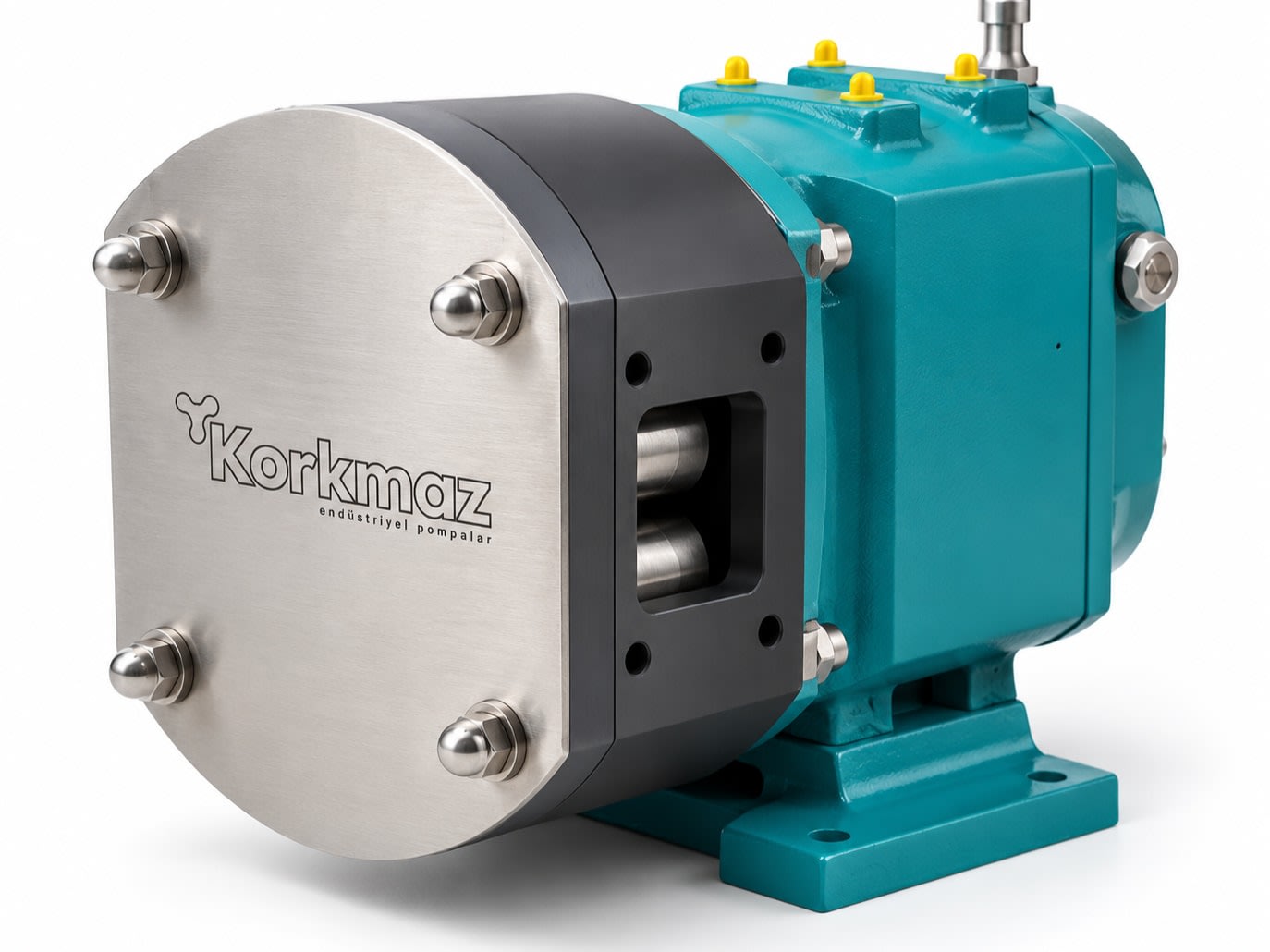
Plastic Surface Lobe Pump
Plastic-surface KLP lobe pump for corrosive and chemical fluids. Wetted material, rotor and seal follow the fluid chemistry.
How to select a plastic-surface lobe pump
Not every fluid is safe in a stainless pump. Aggressive, corrosive, or stainless-incompatible fluids need a wetted surface chosen for that chemistry.
What is a plastic-surface lobe pump?
A lobe pump is positive displacement. Two rotors turn in sync without touching, form a cavity on the suction side, take in the fluid and carry it to the discharge.
- 1
Suction
- 2
Fill the pump
- 3
Carry between rotors
- 4
Discharge
- 5
Send to the system
The point is not only that the pump turns. Reaction with the material, corrosion, service life, protecting the fluid and downtime cost are part of the choice.
- •Avoid reaction between the fluid and the pump material
- •Reduce corrosion risk
- •Extend service life
- •Protect the process fluid
- •Cut maintenance and downtime
Which fluids is it used on?
- •Corrosive chemicals
- •Acid and alkali solutions
- •Chemical process liquids
- •Detergents and cleaning chemicals
- •Some solvents
- •Resins and chemical blends
- •Pigment, paint and coating chemicals
- •Adhesives and viscous chemical products
“It is a chemical, so a plastic pump fits” is not a valid rule. Type, concentration, temperature, viscosity and duty are read together. Prefer the technical data over the trade name.
Why it suits viscous fluids
Unlike a centrifugal pump, lobe-pump performance is not sized on density alone. A water-like fluid and a high-viscosity chemical are not the same duty.
When viscosity rises
| Effect | Result |
|---|---|
| Speed | The required pump speed can change |
| Power | Motor power can increase |
| Suction | Suction conditions become more critical |
| Line | Losses increase |
| Flow | Actual flow can change |
“How many m³/h?” is not answered by flow alone. Flow, viscosity, temperature, pressure, suction and chemistry are one answer.
What back pressure means
Back pressure is the system pressure the pump must overcome on the discharge. A long line, elevation, filter, heat exchanger, small pipe or filler creates that resistance. The pump does not only push; it works against the system.
When back pressure rises
| What changes | Risk |
|---|---|
| Torque and power | Required torque and consumption can rise |
| Load | Load on the pump and seal increases |
| Temperature and flow | Fluid temperature and flow can shift |
| No protection | The equipment can be damaged outside its duty |
Do not run a lobe pump against a closed discharge or unprotected excess back pressure. Relief, bypass or equivalent protection is part of the process design.
Why rotor geometry matters
Lobe geometry
The rotor decides how the fluid is carried. Lobe count does not change flow alone. Pulsation, smoothness, particle passage, mechanical effect, viscous behaviour and efficiency at a given point also change.
Rotor comparison
| Rotor | When | What it does |
|---|---|---|
| Two-lobe | Larger particles, gentler transfer | Wider cavities can ease particle passage |
| Three-lobe | Smoother flow, lower pulsation | Useful on sensitive duties |
| High viscosity | Honey, thick syrup, cream, viscous chemicals | Feed, transfer and motor power are chosen together |
There is no single best lobe. The right rotor is the one the process needs.
Seal selection
The seal closes the gap between the rotating shaft and the body. The choice is not only “no leak”. On chemical duties the seal matters as much as the body material. KLP offers mechanical seals, soft packing and PTFE.
Parameters read together
| No | Parameter | Why |
|---|---|---|
| 1 | Chemistry | Acids, alkalis, solvents and oils do not share face and elastomer compatibility |
| 2 | Temperature | Material limits matter more as temperature rises |
| 3 | Pressure | Duty pressure and pressure at the seal set the element |
| 4 | Particles | Solids or fluids that crystallise may outgrow a standard seal |
| 5 | Duty cycle | Continuous run, frequent start-stop or CIP can need a different seal |
Information required for selection
A pump cannot be selected from “10 tonnes per hour” alone.
Fluid, duty and pump
| Group | Data to collect |
|---|---|
| Fluid | Name, chemistry, viscosity, density, pH, solids |
| Duty | Flow, temperature, suction and discharge head, back pressure, pipe diameter and line length |
| Pump | Lobe type, speed, motor power, seal, body and wetted material, connection |
A chemical fluid needs the right configuration, not only a pump. Chemistry, temperature, viscosity, particles, pressure, rotor and seal are selected together from the process data.
Product Gallery
Images, zoom and video support
1 / 2
360° viewing ready (activates when media is attached).
Applications
Industries, use cases and related sectors
Detergents and cleaning chemicals
Some solvents, resins and chemical blends
Pigment, paint and coating chemicals
Adhesives and viscous chemical products
Engineering Advantages
Design and operational benefits
Limits reaction between fluid and pump material
Lowers corrosion risk
Helps protect the fluid’s properties
Controlled transfer of viscous chemicals
The right seal reduces leak and wear risk
Technical Support
Need Engineering Support? — Plastic Surface Lobe Pump
Contact our team for technical selection, RFQ and application consulting.